
Home / Generator Box vs. Generator Tent vs. Generator Shed
Generator Box vs. Generator Tent vs. Generator Shed
Three common ways to protect a portable generator from the weather, and how to pick the right one.
Search for a generator cover and you’ll see three kinds of products: rigid metal generator boxes, fabric generator tents (also called running covers), and plastic or resin generator sheds. All three keep rain off a generator. They differ in how long they last, how much setup they need, and whether the generator can stay outside all year.
Quick comparison
Stays outside year-round
Yes
Yes
No — set up per event
Varies
Rust
Won’t rust
Can rust once coating is damaged
N/A
N/A
Bolts to a pad
Yes
Usually
No — clamps to the generator
Some models
Snow, wind & impact
Strong
Strong
Limited
Fair
Weight
Light for metal
Heavy
Very light
Light
Best for
Permanent, ready-to-run backup setups
Permanent setups where weight isn’t a concern
Occasional use, camping, job sites
Dry storage between uses
Generator tents and running covers
A generator tent is a vinyl or fabric canopy on a frame that clamps onto the generator. It’s the go-to answer for “generator cover while running” searches because it keeps rain off the control panel and outlets while leaving the sides open for exhaust and cooling air.
- Pros: low cost, light, packs away, works at camps and job sites.
- Cons: you install it when the storm arrives, it catches wind, fabric wears out in UV and cold, and it does nothing to secure the generator.
Generator sheds
A generator shed is usually a resin or plastic storage box sized for a portable generator. Many are meant mainly for storage, and some manufacturers say to open or remove panels before running the generator.
- Pros: affordable, keeps the generator dry and out of sight.
- Cons: plastic gets brittle and warps in heat and cold, light units need anchoring, and some aren’t designed for running the generator inside.
Metal generator boxes
A generator box (or generator enclosure) is a rigid metal housing that bolts to a concrete pad. The generator lives inside it all year with its cords and fuel ready. When the power goes out, you open the vents and start it.
Most metal boxes are galvanized steel. Steel is strong, but the zinc coating is what keeps it from rusting. Cut edges, scratches and fastener holes are where rust starts, and steel boxes are heavy to move and place.
The Generator Box is built from .080″ aluminum with a white textured powder coat, and it locks with a padlock. You get the rigidity of a metal box with a material that doesn’t rust, and it’s light enough to set in place without equipment.
Which should you choose?
- Choose a tent if you use your generator a few times a year, move it around, or need something for camping.
- Choose a shed if you mainly want dry storage and will pull the generator out to run it.
- Choose a metal generator box if your generator is home backup and you want it on the pad, protected and ready to start.
Safety note: No enclosure makes it safe to run a generator indoors or next to an open window. Keep it outdoors, away from doors, windows and vents, and follow your generator’s manual. Read our safety guide.
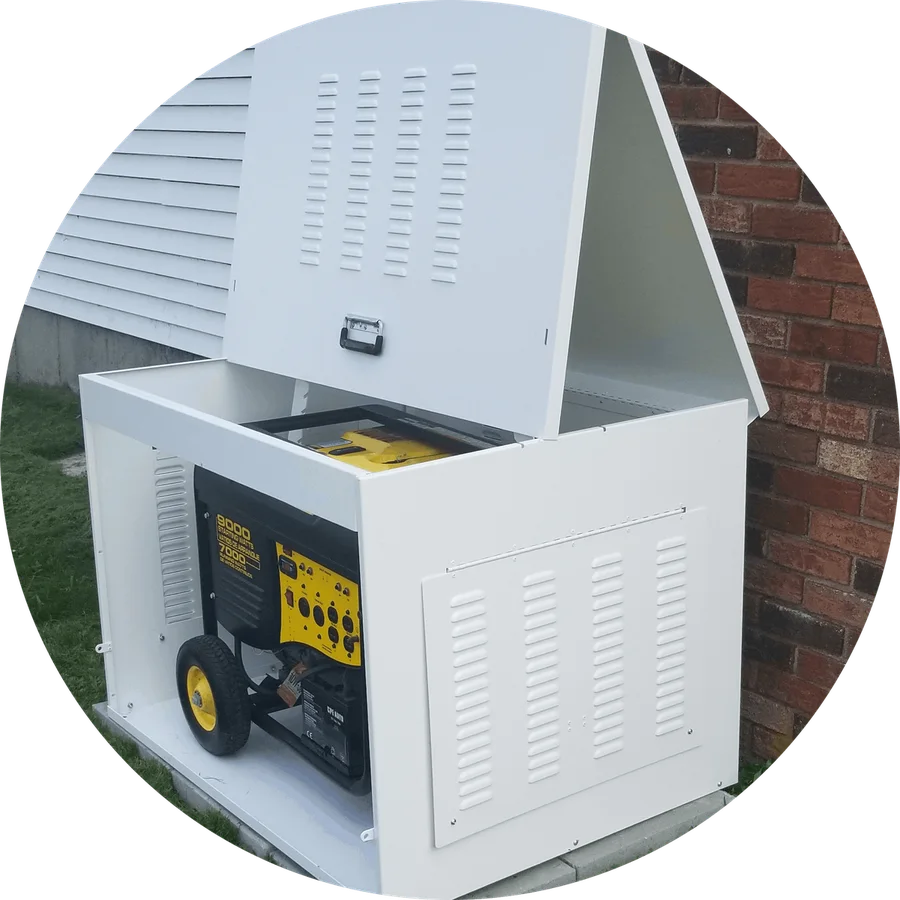
- .080" aluminum, white textured powder coat
- 42" W × 33" D × 30" H · 85 lbs
- Hinged lid + fold-out air windows
- Padlock-lockable, bolts to your pad
Bolt it down once. Stop dragging the generator out.
$1,195 + $150 flat-rate FedEx shipping · Questions? Call (203) 267-1000