
Bolt It Down Once. Stop Dragging The Generator Out.
$1,195 + $150 flat-rate FedEx shipping · Questions? Call (203) 267-1000
Home / DIY Generator Enclosure vs. Buying One
Building your own generator box looks simple. The hard parts are airflow, heat, rot and fire risk.
Plans for a DIY generator enclosure are all over YouTube and Pinterest. Most are wood sheds or plywood boxes with a hinged lid. A well-built one can work, but a generator isn’t a lawn mower. It gets hot, it puts out exhaust, and it needs a lot of fresh air. Here’s what to think through before you start cutting.
A sturdy homemade box usually means pressure-treated lumber or metal framing, sheathing, roofing, hinges, vents, fasteners, paint and a pad. Materials alone can easily run several hundred dollars, and then there’s a weekend or two of your time. Wood also has to be maintained — paint peels, and plywood swells and rots where water sits.
A common search is “homemade generator cover while running,” usually a plastic tote or bent sheet on a frame. Those can keep rain off an outlet panel for a short time. Don’t enclose the generator so tightly that air can’t move freely, and never let a cover touch the muffler.
If the generator is your home backup and you want it outside all year, a purpose-built metal box saves time and upkeep. The Generator Box is cut, formed and powder coated by a sheet metal shop in Connecticut. It arrives ready to set on a pad and lag down.
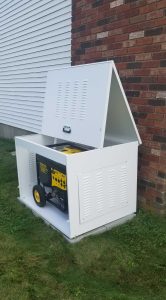
The Generator Box
+ $150 flat-rate FedEx shipping
$1,195 + $150 flat-rate FedEx shipping · Questions? Call (203) 267-1000